Blog

  • The Seven-Day Sad Meal: On Emotional Levers, Cardboard Smiles, and the Courage to Hurt

    There is a quiet, frantic choreography to modern adult love. We treat childhood as a pristine glass vitrine, terrified of the microscopic hairline fractures that might appear the moment reality breathes against it. In Robin, Taylor Swift captured this exact backstage anxiety with devastating precision:

    “Strings tied to levers… / We’ll curtail your curiosity / In sweetness / You have no idea / The time will arrive for the cruel and the mean / You’ll learn to bounce back just like your trampoline / But now we’ll curtail your curiosity

    Swift depicts adults not merely as guardians, but as exhausted puppeteers, frantically yanking levers behind the heavy velvet curtains to engineer an unbroken landscape of sweetness. We tell ourselves we are protecting them. We persuade ourselves that if we just pull the right strings—if we cheer them up fast enough, if we redirect the tantrum, if we promise ice cream after a bad day—we can keep the wolves of the world at bay for one more afternoon.
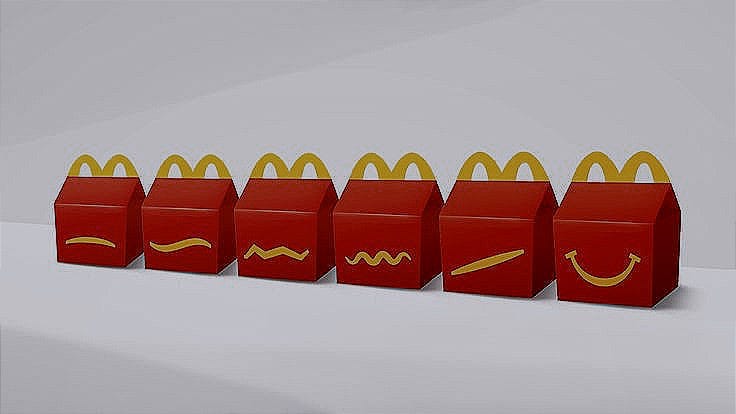
    2.5 million smile-free boxes, distributed across the UK during Mental Health Awareness Week. Photograph: McDonald’s UK / Leo Burnett

    In May 2024, a study conducted across the UK by McDonald’s and BBC Children in Need brought cold empirical weight to this lyrical instinct. The research revealed that 74% of parents felt it was their direct, personal duty to stop their children from ever experiencing sadness.

    It is an instinct rooted in love, but it carries a suffocating byproduct. When nearly three-quarters of parents treat distress as a domestic failure that must be immediately corrected, sadness stops being a natural human season and becomes a hazard. The home becomes an emotional stage where negative feelings disrupt the production.

    And directly across from that paternal fortress sat the quiet casualty of our good intentions: 48% of children admitted they felt an active, unrelenting pressure to look and act happy at all times, even when falling apart inside.

    The Silent Ledger of Performative Youth

    To grow up under the mandate of perpetual cheerfulness is an exhausting, invisible labor. A child does not possess the clinical vocabulary to explain burnout, emotional masking, or ambient dread. What they understand with astonishing sensitivity is adult expectation. They read the furrow in their mother’s brow, the sigh in their father’s voice, the quick, anxious plea of “What’s wrong? Why the long face? Don’t be sad!”

    They learn, with terrifying speed, that their sorrow makes the adults uncomfortable. And so, they adapt. They put on the face required of them.

    This is the haunting interior terror captured in Maa from Taare Zameen Par:

    “Main kabhi batlata nahin / Par andhere se darta hoon main, Maa / Yun toh main dikhlata nahin / Teri parwaah karta hoon main, Maa / … Kya itna bura hoon main, Maa?”

    Remember Ishaan in that echoing boarding school hallway, small and adrift in an oversized uniform, staring out the window into a world that had suddenly decided his differences were defects. Ishaan does not voice his fear because he senses that his distress is a burden. When sadness is treated by parents as an emergency to be corrected rather than a space to be held, a child does not conclude that sadness is normal. They conclude that they are broken for feeling it.

    The child’s thought process is devastatingly simple: If my parents must move mountains to make me smile, then my sadness must be a poison. Am I bad because I am hurting?

    From there, it is a short, tragic hop to the cynical exhaustion of Give Me Some Sunshine from 3 Idiots:

    “Saari umar hum mar mar ke jee liye / Ek pal toh ab humein jeene do / Na na na… Give me some sunshine, give me some rain / Give me another chance, I wanna grow up once again.”

    The tragedy of performative happiness is that it steals the very thing childhood is supposed to offer: the messy, unregulated freedom to exist without an audience. In our quest to give them sunshine, we make the rain feel like a crime.

    The Unprinted Box: When Marketing Meets Emotional De-escalation

    It was directly into this emotional impasse that McDonald’s UK, alongside creative agencies Leo Burnett and Ready10, staged an unprecedented brand intervention during Mental Health Awareness Week back in 2024.

    Picture the standard Saturday afternoon in a UK retail park. It is grey, drizzling, and chaotic. A parent is running on lukewarm coffee and frayed nerves, negotiating the rain-slicked pavement with a backseat occupied by a child who has been overstimulated since 9 AM. You pull into the Golden Arches for immediate, transactional salvation: fried salt, hot fries, four nuggets, and twenty minutes of quiet.

    For forty-five years, the medium of that salvation has been unyielding: a bright red cardboard box sporting a massive, curved yellow smile. The smile was not just branding; it was an instruction manual. It was commercial shorthand for mandatory contentment.

    In May 2024, McDonald’s stripped that smile entirely.

    Across 1,400 restaurants and 2.5 million boxes, the brand removed its most valuable, trademarked visual asset: the big wide yellow smile. The product was stripped of its joyful title “The Happy Meal” and renamed simply: The Meal. In place of the printed grin, children were handed a customizable sheet of stickers showcasing an unfiltered spectrum of emotional states: sadness, anger, confusion, calm, silliness, and fear. The result? The children knew that it was okay to put their choice of the sticker on that bright red cardboard box and say- I am choosing this sticker because that is what I am feeling right now. I am not happy or sad or angry, I am just confused. This was a success on the level of the target audience because they do not have the terminologies to let us know how they are feeling, but they sure know how to express that by drawing or in this case, simply by applying a sticker on a meal box!

    From a pure brand marketing perspective, the campaign was an exercise in radical de-escalation:

    • The Shock Value of Negative Space: In a media environment defined by relentless sensory overload and neon optimism, taking something away is infinitely louder than adding something new. The unprinted box stopped people mid-scroll and mid-bite because it felt naked.
    • The Packaging as an Emotional Dashboard: Fast-food cardboard is not a billboard on a highway; it is an intimate physical artifact that lives directly in a child’s hands for twenty minutes at a table. By turning the box into an interactive canvas, it provided a non-verbal vocabulary. A child didn’t need to endure a high-pressure interrogation from a well-meaning parent; they could simply stick an angry or sad face on their lunch. I wonder if we got the idea of the happy/angry octopus plushie from here! Worth the research I guess?
    • Functional Utility Over Corporate Sloganeering: Partnering with BBC Children in Need and embedding QR codes with dedicated parenting resources allowed the brand to offer an actual tool rather than an empty, pastel-colored social media graphic about “mindfulness.”

    The Seven-Day Empathy Window: The Inevitable Critique

    Yet no corporate campaign—particularly one orchestrated by a multi-billion-dollar fast-food giant built on the very premise of commercial indulgence—can completely escape the gravity of public skepticism.

    The British public, possessed of an innate and glorious radar for corporate posturing, immediately identified the campaign’s temporal neatness. The critique was swift, sharp, and entirely warranted:

    “You have permission to process existential dread from Monday to Sunday, but come next Monday morning, you better wipe those tears and smile while chewing your nuggets.”

    Mental health does not run on a seven-day PR calendar. Human sorrow does not pack up its bags when the corporate communications department moves on to its summer campaign. There is an inherent, deadpan dissonance in asking an anxious ten-year-old to diagnose their emotional fractures via adhesive cardboard stickers while dipping fries in barbecue sauce. A temporary packaging redesign, no matter how brilliantly executed by award-winning agencies, is not a substitute for sustained systemic care or accessible adolescent healthcare.

    And yet, despite the valid corporate cynicism, the campaign touched a nerve that pure advertising rarely reaches. It forced us to confront the silence at our own tables. It forced some people to talk about the elephant in the room. The need of the hour? In a lot many ways, yes!

    From Cardboard Boxes to Kitchen Tables

    The irony of modern protection is that in our frantic attempt to keep children “in sweetness”—pulling levers behind the curtain like the frantic adults in Taylor Swift’s Robin—we often construct fragile glass cages. When 74% of parents believe it is their moral duty to prevent a child from feeling pain, and 48% of kids learn to paste on a smile to keep their parents comfortable, love curdles into censorship.

    The real antidote isn’t found in a cardboard box, nor is it manufactured by an agency during Mental Health Awareness Week. It exists in the quiet, mundane grace of the kitchen table.

    During my time living in the UK, navigating unfamiliar streets with the quiet vulnerability of being far from home, I encountered parents who practiced a different kind of courage. They gave people—and their own children—the radical space to be okay with not being okay. I watched parents genuinely listen over the smallest, most ordinary moments: not mocking or belittling a child who suddenly decided they wanted French fries with their burrito instead of nachos, treating that tiny pivot not as a daily disruption, but as an emerging voice learning how to choose.

    That micro-moment of validation carries the exact same emotional weight as being there for the monumental crashes. It is the space Lorelai Gilmore carved out for Rory: listening without judgment to who they like, staying up to hold space through a shattering teenage heartbreak even when there is an exam the next morning, and speaking to them as independent beings rather than emotional property or extensions of an adult’s unfulfilled ambitions.

    True protection is not curating an artificial paradise where no one falls. It is resisting the urge to sugarcoat the world. Children are supposed to stumble. They are supposed to fall for the wrong person, pick the wrong menu item, endure the ache of disappointment, and discover that happiness is an episodic visitor, not a permanent resident.

    When we shield them from hurt, we don’t preserve their innocence—we guarantee their disillusionment. We send them into adulthood armed with synthetic optimism, only to watch them fracture against the first brutal, inevitable collision with reality.

    McDonald’s peeled the smile off 2.5 million boxes for seven days to make a point about emotional honesty. But the real lesson doesn’t belong on a fast-food counter. It belongs in our willingness to look at someone we love—holding a heavy heart, or just an unconventional plate of fries—and say: I see you. You don’t have to smile for me.


    References
    • Leo Burnett UK. 2024. “The Meal.” Creative Case Study. London: Leo Burnett UK. Leo Burnett: The Meal.Leo Burnett
    • Ready10. 2024. “McDonald’s Launches ‘The Meal’: New Integrated Campaign Removes the Iconic Smile from Happy Meal Boxes® for the First Time Ever to Mark Mental Health Awareness Week.” Press Release. London: Ready10 / FAB News. Ready10 FAB News Announcement.
    • McDonald’s UK. 2024. “McDonald’s Removes Iconic Smile from Happy Meal® Boxes for the First Time Ever to Mark Mental Health Awareness Week.” McDonald’s UK Newsroom. McDonald’s UK Newsroom Announcement.
    • BBC Children in Need. 2024. “Supporting Emotional Well-being with McDonald’s UK.” Mental Health Awareness Week Partnership Hub. London: BBC Children in Need.
    • The Children’s Society. 2023–2024. The Good Childhood Report. London: The Children’s Society.
    • NHS England. 2023. Mental Health of Children and Young People in England, 2023. NHS Digital / Office for National Statistics.
    • Swift, Taylor. 2024. “Robin.” Track 29 on The Tortured Poets Department: The Anthology. Republic Records.
    • Joshi, Prasoon, Shankar Mahadevan, Ehsaan Noorani, and Loy Mendonsa. 2007. “Maa.” In Taare Zameen Par, directed by Aamir Khan. Mumbai: T-Series.
    • Kirkire, Swanand, and Shantanu Moitra. 2009. “Give Me Some Sunshine.” In 3 Idiots, directed by Rajkumar Hirani. Mumbai: Vinod Chopra Films / T-Series.
    • Sherman-Palladino, Amy. 2000–2007. Gilmore Girls. Warner Bros. Television.
    • For a visual breakdown of how the creative agency and McDonald’s executed the smile-free packaging activation, take a look at the McDonald’s – The Meal Case Study. This showcases the physical boxes and public reactions during the UK campaign week, providing direct visual context for the creative strategy discussed in this essay.
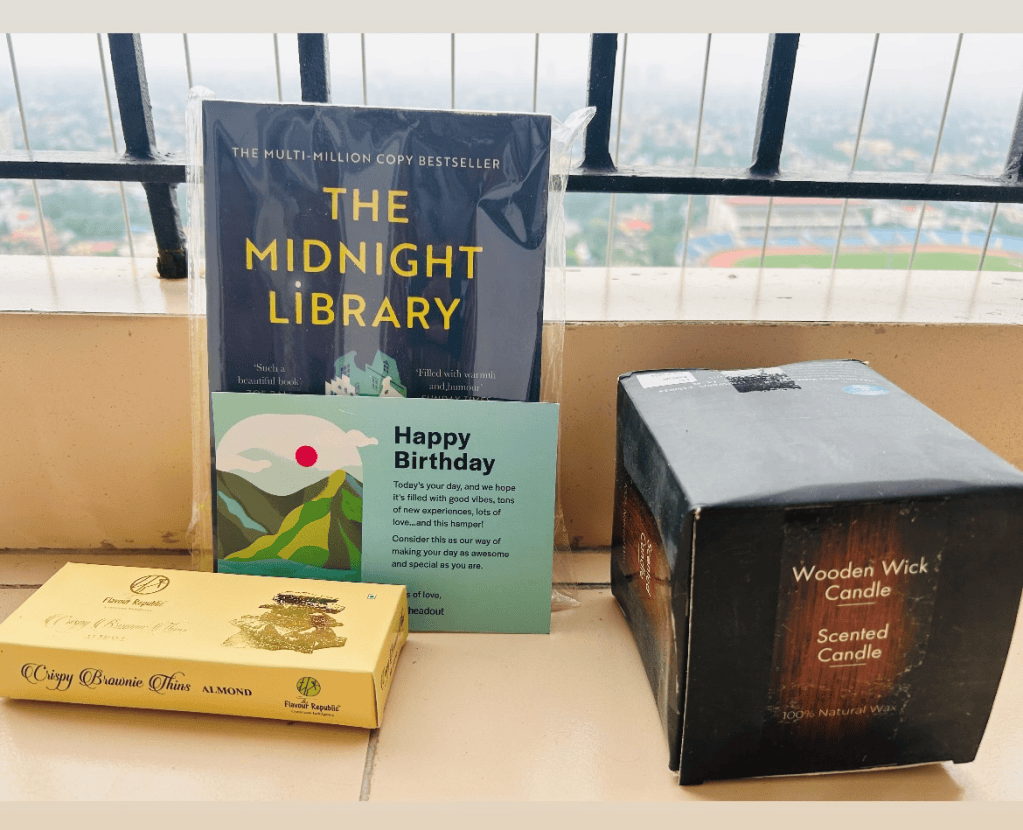
  • Headout State of Mind


    “Cause I am real tough kid,

    I can handle it.

    They say babe you gotta fake it till you make it

    And I did.”

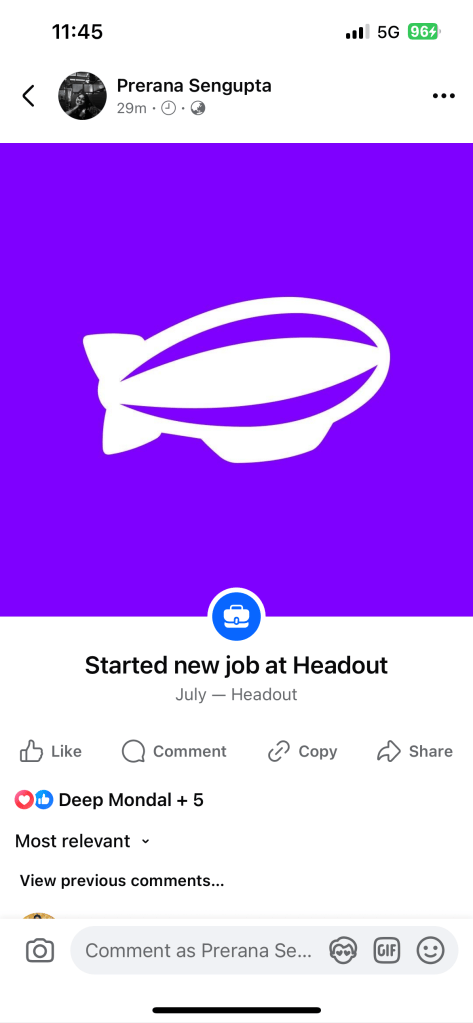
    A word I came across on a random July afternoon while scrolling through LinkedIn.

    At the time, I didn’t know much about the company. What I did know was that it was a late-stage startup operating in the travel industry. During my time in the UK, I had occasionally stumbled across Headout while looking up tickets to attractions in London. I knew they sold experiences. I knew they existed. And that was about it.

    Like most pieces of information we encounter every day, this one quietly drifted to the back of my mind, filed away somewhere between forgotten passwords and half-finished to-do lists. By the time I came across a job posting from Headout on LinkedIn months later, I had almost completely forgotten about it.

    Almost.

    What happened next was, admittedly, not part of any grand career plan. In fact, my ”grand career plan” and I have never really been on speaking terms. For a really long time.

    The Application Journey

    I applied to Headout sometime around June or July 2025 through a LinkedIn job posting. The process itself was fairly straightforward. The day I applied, however, was about as ordinary as a day could possibly be.

    Back then, I had perfected the art of routine. I would wake up around eight or nine in the morning, make myself a bowl of oats or granola, cut up some fruit, put on an episode or two of F.R.I.E.N.D.S, and worry about my career. That last activity occupied more time than I’d care to admit.

    After spending forty-five minutes with my breakfast and an unhealthy amount of overthinking, I would begin my daily pilgrimage across LinkedIn, Indeed, Naukri, company career pages, and every other job platform known to humanity. Armed with a CV, determination, and increasingly questionable levels of optimism, I was essentially hoping that somebody, somewhere, would offer me a job in… well, anything.

    On one such wildly eventful day, I came across two job postings from a company called Headout. What caught my attention first wasn’t the role itself, but the logo. It was one of the most intriguing logos I had seen in a long time—something I would later learn was inspired by the iconic Led Zeppelin blimp. Naturally, I clicked.

    As I scrolled through the job description, one particular line caught my eye. It said something along the lines of: “If you’re organised like Monica from F.R.I.E.N.D.S…”

    That was it. That was all it took.

    Somewhere between Monica Geller and my own inability to resist a good pop-culture reference, I had already decided I wanted to apply. Long before the virtual interviews, the assessments, or the onboarding process, I found myself developing an affinity for the company. There was something refreshingly human about the way the role had been written. It felt conversational. Playful. Unapologetically itself.

    In my head, I made a quiet decision: One day, I’m going to work here.

    What followed was perhaps my most thorough piece of investigative journalism to date. I searched Glassdoor. I searched Reddit. I searched LinkedIn. I searched every corner of the internet that could possibly tell me what people thought about Headout. I wanted to know whether the company I had imagined from a single job description actually existed in reality. To my surprise, the reviews seemed to support the impression I had formed.

    And then there was the application process itself. Anyone who has spent time job hunting knows the ritual. Upload your CV. Re-enter every detail from your CV into seventeen separate fields. Confirm information already visible on your CV. Create a password you’ll never remember. Receive an automated rejection email three weeks later. Headout somehow managed to avoid that experience entirely. The application process felt straightforward, respectful of my time, and refreshingly free from unnecessary hurdles. At that point, Headout had officially become my favorite company that I didn’t yet work for.

    And trust me, I don’t say that lightly. Although, admittedly, I do have a flair for the dramatic.

    Things moved surprisingly quickly after that. Within about ten days of submitting my application, I received an invitation for the first online assessment. Then came the recorded video interview, followed by the subsequent rounds.

    Now, this is where my affinity for Headout really started to grow. I should probably confess something: I am terrible at interviews. Not because I lack experience. Not because I don’t prepare. I simply panic. The moment someone asks me, “Tell me about yourself,” my brain abandons all professional aspirations and transforms into an overexcited Labrador chasing five tennis balls at once.

    I’ve always struggled with highly structured interviews. The kind where both parties already know the script and spend the next forty minutes pretending they don’t. So, before my first interview, I prepared accordingly. I had my notes ready, a gallon of water beside me, and a carefully rehearsed answer to the question I dread most.

    The funny thing is, that question never came. At least not in the way I expected.

    For the first time in a very long time, an interview felt less like an interrogation and more like a conversation. The discussion flowed naturally. I found myself talking rather than performing. And somewhere during that conversation, I had a thought: I think I’ve found my match.

    Apologies for borrowing terminology from the dating world, but job hunting and online dating do have a surprising amount in common. You’re trying to present the best version of yourself. They’re trying to decide whether you’re compatible. Everyone is hoping to avoid rejection. And every now and then, you come across a connection that just feels… easy.

    The Big Day: The Onboarding Bubble

    There is a very specific kind of excitement that comes with joining a new company. It sits somewhere between the first day of school and the first episode of a TV show everyone has been recommending for years. You don’t really know what to expect, your nerves are competing with your enthusiasm, and you are secretly praying you’ve made the right decision.

    That was me on my first day at Headout.

    After weeks of interviews, assessments, and wondering if I had somehow imagined the entire experience, I was finally here. The first thing that struck me wasn’t a rigid policy document or a daunting organizational chart; it was the people. Real, enthusiastic, smiling people who somehow managed to make a virtual onboarding feel surprisingly warm.

    Now, if you’ve ever attended corporate training before, you know that “icebreakers” can be an absolute minefield. There is always a tiny, panicked voice in your head praying nobody asks you to “describe yourself using a fruit.” Thankfully, this wasn’t that. The conversations felt natural, and people were genuinely curious about one another. Between the shared laughter, the occasional awkward Zoom silences, stories from different backgrounds, and very competitive games of Pictionary, a group of complete strangers slowly began feeling a little less like strangers. Looking back, I think that’s something Headout does remarkably well: it doesn’t just introduce you to a company; it introduces you to a community.

    Our trainers deserve a special mention. Training can easily devolve into an endless, mind-numbing parade of slide presentations, corporate acronyms, and information overload. Instead, ours felt incredibly thoughtful. Questions were actively encouraged, and curiosity was rewarded. No one made you feel silly for asking something twice—or even three times. There was an unspoken understanding that learning wasn’t about pretending to know everything; it was about becoming comfortable enough to admit when you didn’t. As someone who routinely needs to ask approximately four hundred questions before feeling remotely confident, this environment suited me perfectly.

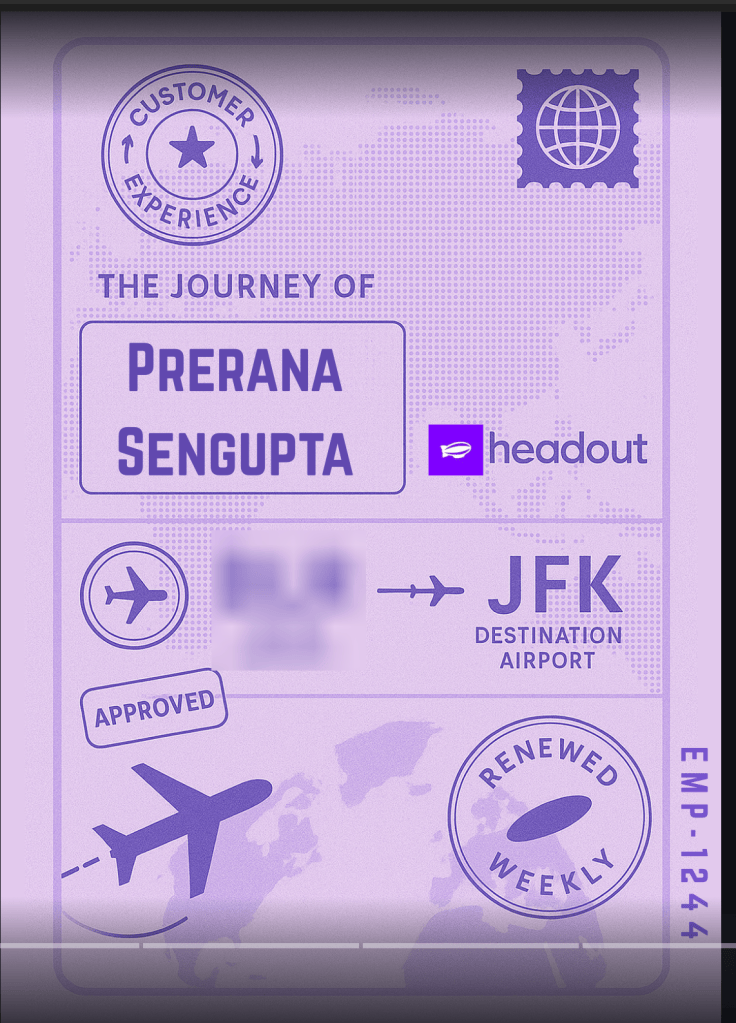
    This image shows a weekly passport we got during the training days at Headout. This is the first page of a 4-5 paged document. It is a fun way of sharing the message that the associate is right on track!

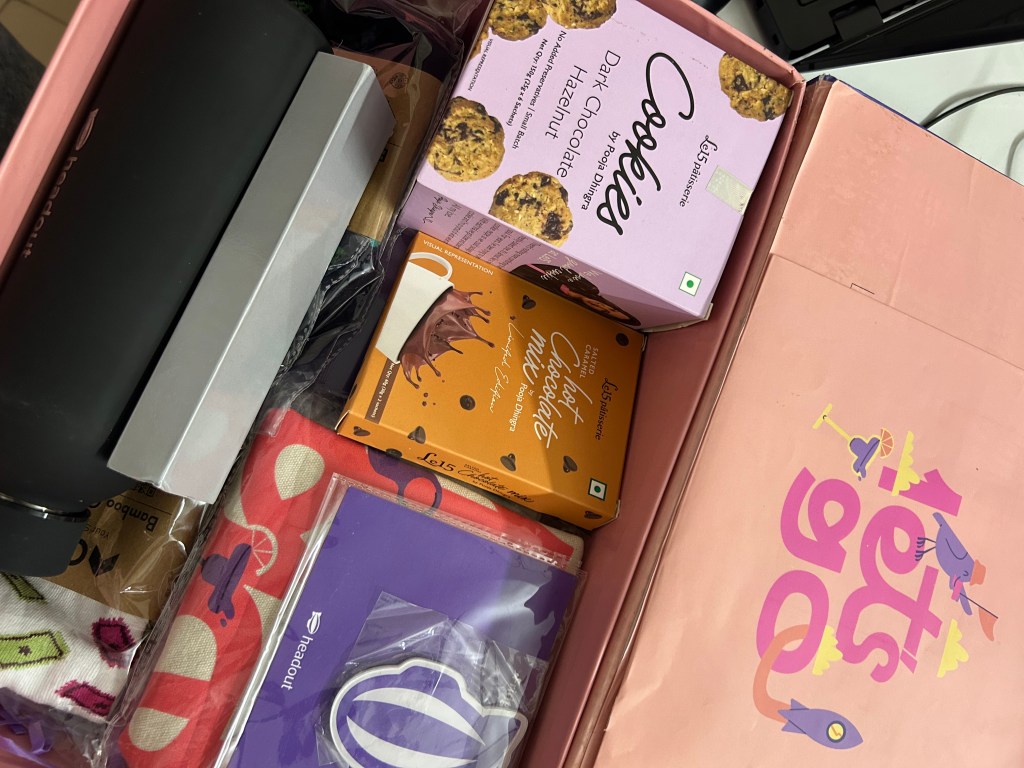
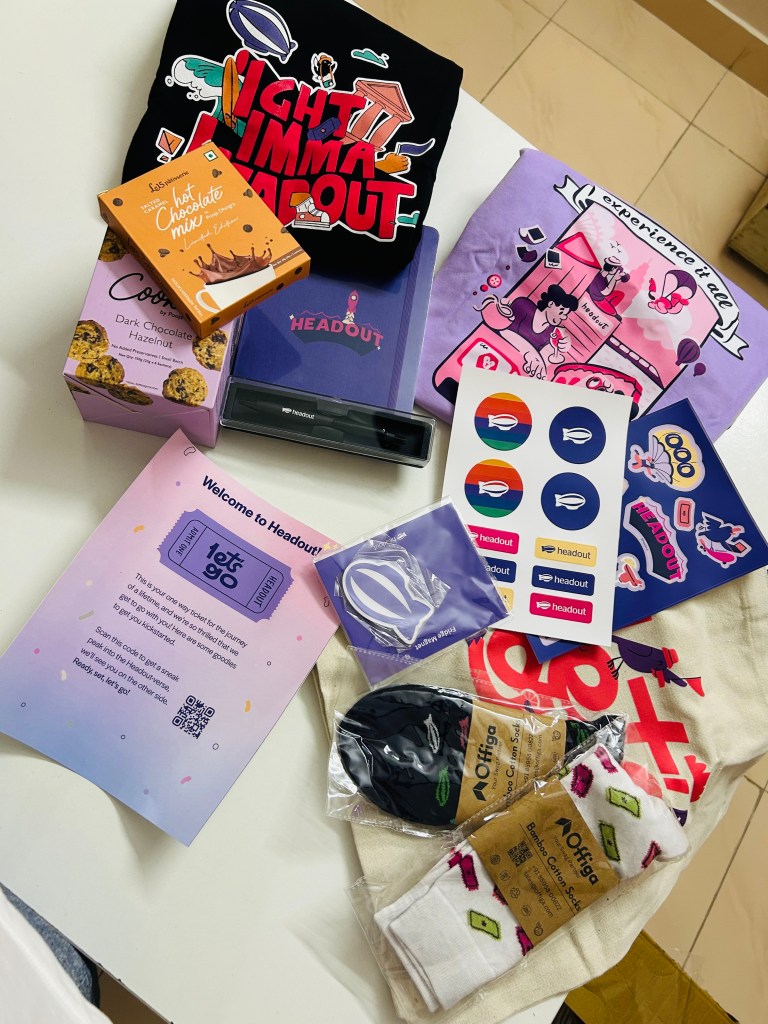
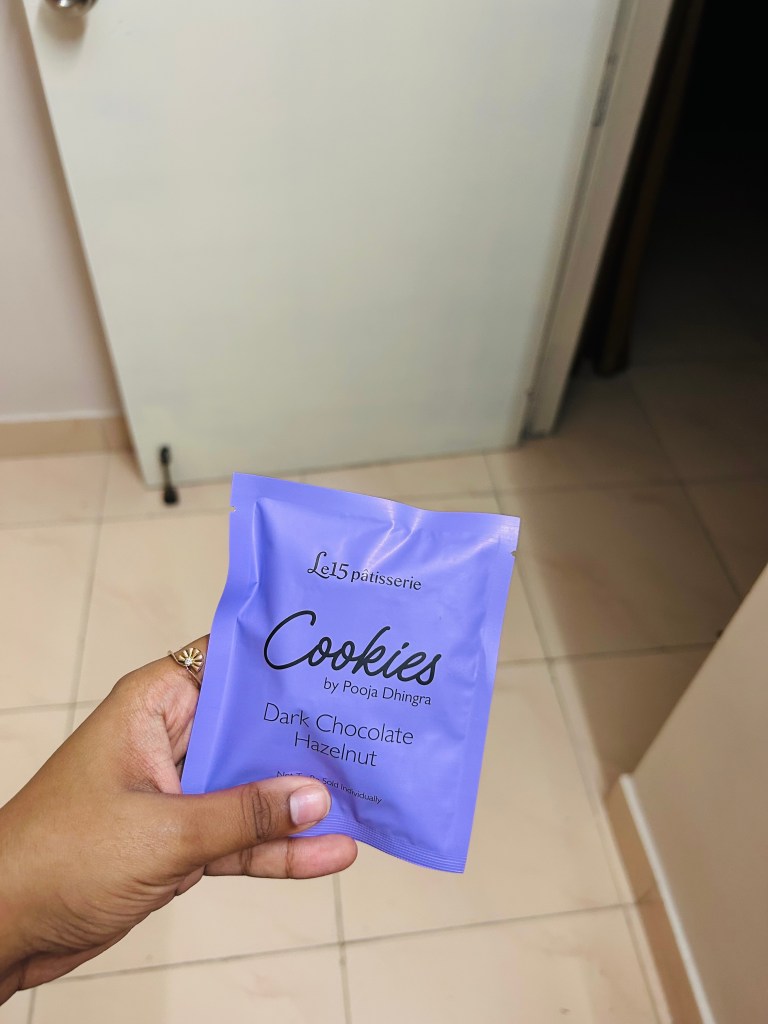
    Then came what was arguably one of my favorite moments of onboarding: the Headout swag kit.

    Now, I fully acknowledge that branded merchandise should not bring an adult this much joy. And yet, opening that package felt oddly special. The notebook, the T-shirts, the stickers—the little details had clearly been put together with genuine care. None of it was strictly necessary, which is precisely why it mattered. Good company merchandise doesn’t make you love your job, but it does make you feel like someone expected you to be there. Like they had prepared a place for you before you even arrived. It sounds like a small thing. It isn’t—especially when you’re starting somewhere completely new.

    By the end of training, I realized something had quietly shifted. I had joined Headout expecting to learn a new role. Instead, I had started learning an entirely new way of thinking about work. Some companies train you to blindly complete tasks; others teach you to understand why those tasks exist in the first place. Headout, I was beginning to realize, belonged firmly in the second category.

    It was a beautiful, comforting realization.

    The Reality Check: Finding My Footing on the Frontline

    As it turns out, understanding the theory of how a fire starts is very different from standing in front of a live blaze with a single bucket of water. My cozy training bubble was about to meet the fast-paced, high-stakes reality of live customer experience.

    On August 4th, 2026, I officially hit my 365-day mark in this role. One full year. But if you had told me six months ago that I’d be hitting this milestone, I probably would have laughed—or cried. Or both. Dramatic, remember?

    Frontline operations require a unique kind of resilience. I came in as someone driven deeply by words, long-form narratives, and the open spaces of creative thinking. I had romanticized what my workday would look like—imagining fixed creative rhythms and hours spent painting cities in vibrant prose.

    Instead, stepping into the customer workflows was an intense shock to the system.

    The first six to seven months tested me in ways I hadn’t anticipated. It was fast, relentless, and emotionally demanding. You are resolving escalations in real-time for travelers whose dream vacations are hanging in the balance, often navigating high frustration over issues completely outside your control. For a while, I felt out of my depth and found myself caught in a bit of a rut. It is an exhausting feeling when your daily routine is consumed by high-urgency problem-solving while your creative instincts feel tucked away in the background. I watched colleagues effortlessly thrive in operational problem-solving or transition seamlessly into other functions, and I wondered if I’d ever find my own rhythm or figure out where I truly fit.

    The Eighth-Month Epiphany: An Accidental Masterclass

    And then, right around the middle of my eighth month, something shifted. It wasn’t a sudden corporate miracle or a magical drop in ticket volumes. It was simply a change in the lens I was looking through.

    I woke up to a perspective I had been completely oblivious to: I was sitting through an intensive, unfiltered masterclass in business growth and consumer psychology.

    Suddenly, those high-stress escalations weren’t just hurdles; they were data points. I was learning the exact, raw pain points of global travelers. I was discovering what makes a guest lose confidence in a brand, and what tiny gestures of genuine empathy can turn a stressful moment into lifelong brand loyalty. More than that, I was getting a rare, backstage view of our supply mechanics. I began to see firsthand how seamless partnerships elevate the guest experience, and how stringent policies, miscommunications, or unexpected operational delays on the partner side can ripple through to create friction for the traveler.

    I had spent months viewing the role as a waiting room, waiting for my “real” creative career to start. In reality, Headout had handed me the ultimate launchpad. How can you write compelling content, design thoughtful narratives, or drive growth for a travel tech brand if you don’t truly understand what happens on the ground?

    My aspirations haven’t changed—my heart is still firmly set on content, brand storytelling, and creative strategy where I can let my love for narrative take center stage. But the overwhelm has been replaced by purpose. Instead of feeling weighed down by the daily workflow, I’m using every single interaction as building blocks for what comes next.

    Breaking the Script: Capability Over Pedigree

    I grew up with a very specific, traditional script about careers: if you are lucky enough to be given a job, you stick to the safe path. You put your head down and stay within the lines. To switch paths—especially into marketing or creative strategy—the unspoken rule, particularly in traditional corporate environments, is that you need the armor of formal credentials. You need the exact degrees, the neat certifications, or a prestigious stamp of approval before anyone even considers giving you a seat at the table.

    What I found at Headout completely flipped that script.

    Headout looks far beyond formal qualifications on a resume; it genuinely values who you are, how you think, your drive, and the unique perspectives you bring to the table. It is an environment that evaluates capability and curiosity over rigid pedigrees, giving you the room and encouragement to grow.

    I lucked out in the absolute best way possible with my managers. In an industry where management can so easily become an exercise in micromanagement, my managers became a safe harbor. Their unwavering support changed everything for me. Instead of boxing me into a single workflow, they gave me the psychological safety and the encouragement to lift my head up, look at the bigger picture, and actively shape what I want my career journey to look like.

    For the longest time, I didn’t have a clear roadmap. I was just trying to keep pace. But this past year on the frontlines didn’t dim my creative spark; it sharpened it.

    This journey taught me that I am, at my core, a storyteller—and that understanding real human behavior is the best foundation any writer could ask for. The experience I’m gaining right here—learning how humans make decisions, navigate stress, travel, and experience the world—is the most valuable qualification I could ever earn.

    It has now been 414 days of me being a Headouter. It hasn’t been a flawless, glossy year, and I’ve certainly had moments where the learning curve felt steep. But it has been deeply authentic. I am embracing this experience as a launchpad, not a detour. The story is just getting started, and for the first time in a very long time, I am excited to write the next chapter.

    If you had told me a year ago that I’d navigate 365 days of frontline customer experience and emerge with more clarity than ever, I wouldn’t have believed you. But there’s a poetic irony to it: learning to navigate the chaotic, unpredictable world of travel operations helped me find my own direction. Turns out, you don’t need an MBA to understand how the world works—you just need a little grit, an endless supply of questions, and a workplace that values people over paper.

    If this chapter of my life had a theme song, it would undoubtedly be “Dog Days Are Over” by Florence + The Machine. It’s got that exact mix of frantic energy, a thumping baseline of resilience, and that sudden, triumphant realization that you’re finally running toward the light. The uncertainty is over; the storytelling phase has begun.

  • Phantom Love

    cigarette smoke blurring the lines

    Between what is and what could have been.

    A thin line now.

    The smoke dissipates and with that reality melts into dream.

    You sit there. Across the table maybe.

    Me.

    You.

    Distant by a piece of carved wood.

    Intimate and intertwined with each other’s soul.

    The sizzling of the pancake batter on the stove.

    The light tune of a song we both love.

    The sound of your laughter because the joke I told was too lame.

    My “hmph” mimicking that of the future daughter we have.

    A sudden thud and I am snapped back to the real.

    The line ever so visible now.

    You.

    I love you. It’s ruining my life.

    I love you. It’s ruining my life.

    I love you. It’s ruining my life.

    I love you. It’s ruining my life.

    I love you. It’s ruining my life.

    Me.

    No carved wood. Just two people in different places. On different pages.

    A constant ring of a phrase I’d rather not say.

    Echoes of an unknown voice. Or maybe your real voice take away the sound of your laughter.

    It keeps saying, I never loved you though.

    I wake up with a jolt;

    What is real? What is not?

    I look up and there you are,

    cigarette in hand,

    blowing away the smoke. 

    the line?

    doesn’t seem to exist anymore.

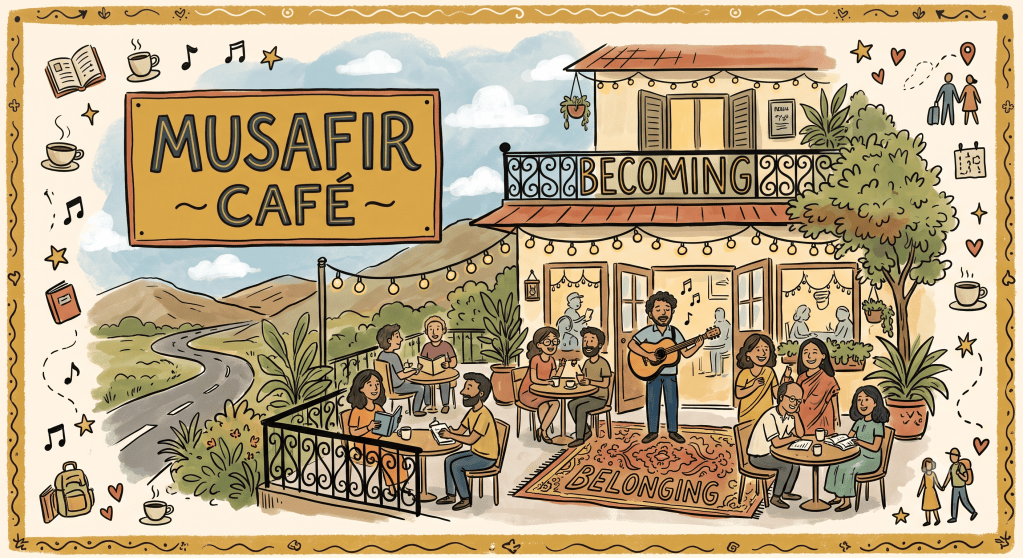
  • Of Becoming and Belonging

    “तू मेरा हो गया, इतना ही काफी है

    दिल मेरा जुड़ गया तुमसे, ये काफी है ना?

    काफी है ना?”

    — “Kaafi Hai Na”

    Firstly, thank you to the writers and creators of the beautiful book and now the Netflix series titled Musafir Cafe. Please note that this is not a sponsored post or blog. This is just me reflecting on the series that made me think about love, question it as we know it, and finally stop making room for anything that I know is not love—not for me at least. I hope you like reading it.

    I am not going to lie about why I watched this series. No, I did not stumble upon it while scrolling through Netflix while deciding what to watch that night. Unfortunately, neither did I read the book before that inspired me to watch it. I watched it because I fell in love with the music featured in this series. I was awestruck by how beautifully the songs encapsulated the beauty of love—oh, let’s not forget the pain of that human emotion either. The classification of the series promised a romantic drama. So the music, in addition to the temptation of the romantic drama—I had to watch it. In one sitting. Fall in love with the characters. Find parallels of the storyline in my own life. Cry my eyes out.

    The Soundtrack of Unraveling

    It started with a melody—the kind that sneaks under your skin before you even realize you’ve opened the door. The music in Musafir Cafe didn’t just play in the background; it felt like a silent third character, articulating every unspoken fear, every unsaid “stay,” and every heavy “goodbye.”

    As the episodes rolled on, I realized I wasn’t just watching Chander, Sudha, and eventually Preeti navigate their messy, beautiful, and terrifying versions of intimacy. I was watching a mirror.

    We live in a world obsessed with checklists. We check off degrees, jobs, dates, and milestones, desperately trying to construct a life that feels complete. But what happens when you meet someone who doesn’t fit into your carefully curated boxes, yet somehow fits into the empty spaces of your heart? Musafir Cafe asks a question that hits a little too close to home: Is love about settling down, or is it about finding someone who lets you be a wanderer without feeling lost?

    Is Love Really Enough?

    The first song that completely unravelled me was “Kaafi hai na”. The lyrics ache with a vulnerable, almost desperate question:

    “Tu mera ho gaya, itna hi kaafi hai
    Dil mera jud gaya tumse, ye kaafi hai na?
    Kaafi hai na?”

    Listening to these lines, I found myself confronting a question I think many of us spend our lives dodging: Is love really enough?

    Is the mere fact that you were chosen—that someone belongs to you in a moment of time—enough to make you stay? We are conditioned to believe that love is the ultimate currency, the magic ingredient that cures incompatibility, bad timing, and existential unrest. But sitting there at 2 AM, I wondered if accepting “just love” is actually a form of settling. Is being loved by someone enough if that love requires you to compromise the peace of your own soul?

    It instantly brought to mind Taylor Swift’s haunting track, “peace”, where she asks:

    “Would it be enough if I could never give you peace?”

    That intersection is where the tragic weight of modern relationships lies. You can love someone with every fiber of your being, and yet, your presence in their life—or theirs in yours—might bring chaos instead of calm. If love cannot bring peace, is it truly enough to sustain two people? Or is staying in a storm, just because you love the rain, a slow form of self-sabotage?

    The Ghost in the Room: “Toota Rahunga” & The Fear of What Comes Next

    Then came “Toota Rahunga”, and it shifted something fundamental in me.

    “Humko bichadna na tha gawara,
    Toota rahunga bin tere main yahan.”

    What makes this track so haunting is its perspective. It gives voice to the man left standing in the ruins of a separation from Sudha that he never wanted, promising to remain broken right where he was left. 

    As a viewer, it breaks your heart for Chander. But then Preeti enters the picture. Preeti—the woman who comes after the destruction. The woman who stands beside him, who nurtures him, and who actively helps him bring his dream of the Musafir Cafe to life.

    And as I watched Preeti pour her heart into building a life with a man who had sworn “Toota rahunga,” a familiar ache settled in my chest. Recently, I wrote a short note on Substack that came flooding back to me as those episodes played:

    Watching Musafir Cafe and wondering if this is one of my quiet fears.

    Not that the person I love has a past—we all do.

    But that somewhere in his heart lives a love so profound that every love after it is simply learning to live with the absence of the first.

    I don’t want to replace her. I just hope I never have to compete with a memory.

    That is the terrifying core of being the Preeti in someone’s life. When a person vows to stay broken after love fails them, what happens to the next person who steps in with open arms? Does Preeti get to be loved wholly, or is she just helping him build a sanctuary out of the wreckage left by someone else?

    The hardest rival in love isn’t a living competitor—it’s an idealized memory. A nostalgic phantom like Sudha that stays frozen in the past, forever unblemished. It leaves you asking whether a person who has sworn to stay broken ever truly leaves that state, or if the woman who arrives later is forever tasked with tending to a garden where another woman’s roots were planted.

    The Difference Between Belonging and Holding On

    Watching the story unfold alongside these haunting tracks made me re-examine my own understanding of love. For a long time, I thought love was measured by endurance—how much you could compromise, how long you could stay, how much space you could make for someone else, even if it meant shrinking yourself in the process.

    But watching the characters stumble through their fears taught me something vital: attachment is not love, and familiarity is not belonging.

    Sometimes, two people cross paths not to build a permanent home together, but to act as a cafe along the journey—a warm, safe stopover where you catch your breath, learn who you are, and gather the courage to keep moving forward. And that doesn’t make the love any less real. It just means its purpose was to transform you, not to bind you.

    “Becoming” Before “Belonging”

    The title of this reflection came to me somewhere around the middle of the show, when my tea had gone cold and my eyes were blurry with tears.

    I realized how often we rush to belong to someone before we have finished becoming who we are meant to be. We crave the comfort of being chosen, so we accept diluted versions of affection. We mistake anxiety for passion, and obligation for commitment. We convince ourselves that “kaafi hai na” because we are terrified that demanding peace, wholeness, and a heart unburdened by past ghosts will leave us with nothing at all.

    Musafir Cafe reminded me that real love doesn’t demand you abandon your journey, nor does it ask you to play the role of a healer in someone else’s unfinished mourning. It honors your path. It creates room for you to grow, even if that growth eventually takes you in a different direction.

    Stopping Room for “Almost Love”

    Closing Netflix that night, I felt a strange mixture of grief and quiet liberation.

    Grief for the times I gave away pieces of myself to hold onto relationships that were already slipping away. But liberation in knowing that from now on, my standards for love have changed forever.

    I don’t want an “almost” love. I don’t want a love born out of convenience, timeline pressure, or the fear of being alone. I don’t want to be someone’s secondary chapter—the one who helps build the dream while their heart remains anchored to a “Toota Rahunga” past. Nor do I want to settle for a love that lacks peace just because it exists.

    I want a love that feels like home, not a negotiation—and certainly not a compromise with a memory. And until that arrives, I am learning to belong to myself first.

    To the creators of Musafir Cafe: thank you for telling a story that felt less like fiction and more like a quiet permission slip to feel, to grieve, and ultimately, to let go.

    A note to whoever is reading this:

    If a song, a book, or a series has ever held a mirror to your heart and forced you to face a truth you were avoiding—let it. Sometimes, breaking your own heart open is the only way to let the right kind of light back in.

    Let me know your thoughts

  • Sorry, Not Sorry

    “They are burning all the witches, even if you aren’t one

    They got pitchforks, and proofs, they don’t need their reasons

    So light me up, light me up, light me up, go ahead and light me up…”

    – I did something bad (Reputation, 2017, Taylor Swift)

    You’d probably think I’ve lived a hundred different lives based on the sheer volume of blog posts I write daily. If you ever scrolled through my Notes app, you’d assume I have an innate flair for dramatic storytelling.

    Now, while my life might not be “full” in the traditional sense, it has certainly been full of drama—and filled with dramatic people who love to accuse me of “exaggerating.”

    “I swear I don’t love the drama, it loves me!”

    — Endgame (Reputation, 2017, Taylor Swift)

    Anyone who knows me knows that my personality is essentially a chaotic amalgamation of sitcom quotes, pop lyrics, and a million Taylor Swift interviews. I might cry over something trivial, and I might be genuinely heartbroken when “friends” say derogatory things about me behind my back… but I will always bounce back.

    And frankly? I don’t give a single fuck if someone thinks I “exaggerate,” “lie,” or “manipulate” to get my way. Surprisingly enough, the people who throw those words around are usually the biggest manipulators I’ve ever met—classic wolves in sheep’s clothing.

    Right about now, you’re probably wondering: Why is she rambling about this? What went wrong? Who hurt her?

    This is where my borrowed Taylor Swift personality traits start to make a lot more sense.

    Anyone who follows pop culture even casually knows about the whole Selena Gomez and Justin Bieber saga. We all have our takes. But Taylor’s stance was crystal clear. When asked about Justin in a post-awards interview after one of their breakups, her entire reaction was just a classic eye roll, a heavy “UGH!”, and a sharp “Next question.”

    Her priority was her best friend, her sister, her lifeline—not some guy who had the potential to hurt her. (And before anyone jumps down my throat: this isn’t a hot take, just an observation. As a girl’s girl myself, I’ve rarely liked my best friends’ men, and the feeling has usually been mutual.)

    That interview was core-memory material, and I realized just how much it stuck with me last night.

    A little someone from my tertiary circle (or honestly, an even farther orbit) told one of my closest people that I am “all about exaggeration.” Why? Because I shared a simple story about someone I knew through him, and the details got a little blurry on who did what to whom.

    When it eventually got back to me—because of course it did—my reaction was an instant eye-roll and a heavy UGH. What else is new? Just another cheapskate wannabe who decided to hate me.

    Here’s the thing: if you dislike me, simply stop existing in my orbit and stop keeping me in yours. With very few exceptions, I genuinely do not care who stays and who goes. I have zero time for two-faced energy—people who ask the thief to steal and then run to report it to the police. Grow a spine for heaven’s sake, and have the courage to confront people directly.

    Besides, watching people audit my life and police how I tell my own stories has made two specific moments live rent-free in my mind—and they have practically become my life philosophy.

    First, that iconic moment in the Miss Americana documentary where Taylor just bursts out laughing at the sheer absurdity of someone trying to micromanage her:

    “Sorry, was I being loud? In my own house? That I bought? With the songs I wrote? About my own life?” (Miss Americana, January 2020)

    That response blew my mind because… exactly. The audacity of people telling you that you’re “too much” in a narrative that you are living and creating? It’s comical. I’m writing from my own experience, in my own space, and you’re mad that I’m taking up room? Please.

    And second, that legendary speech where she broke down the endless, unwinnable moving target of public commentary:

    “They say I’m dating too much? Okay, fine, I’ll stop dating and just hang out with my female friends. Oh, now that’s a calculated girl gang strategy? Okay, fine, no one will see me for a year…” ((Billboard Woman of the Decade award acceptance speech of Taylor Swift, December, 2019)

    It made me realize that when people decide to misinterpret you, you will lose no matter what move you make.

    • If you express your feelings, you’re “dramatic.”
    • If you tell a story with passion, you’re “exaggerating.”
    • If you set boundaries and walk away, you’re “calculating.”

    When you realize that the goalposts will always shift depending on who is trying to tear you down, you stop running toward them. You stop trying to explain yourself to an audience that was only ever looking for a flaw in the performance.

    So, why is this blog titled “Sorry, Not Sorry”?

    Because for a brief second, the polite, conflict-averse part of me—the part trained to keep the peace—thought about softening the edges. Thought about saying, “Oh, maybe I should clarify,” or “Maybe I shouldn’t take up so much space.”

    Then I remembered who I am.

    • Sorry that my life doesn’t fit into your sanitized, boring narrative where everyone speaks in polite whispers and pretends to care.
    • Sorry that I tell stories with passion, love with intensity, and refuse to play small just to make petty people comfortable.
    • Sorry that I curate my inner circle with ruthless precision—if you’re not in it, your opinion carries the exact weight of a skipped ad on YouTube.

    …But NOT SORRY for living out loud. NOT SORRY for rolling my eyes, hitting “next question,” and saving my energy strictly for the people who actually ground me.

    At the end of the day, my life isn’t a courtroom, and I’m not standing trial for background extras. You call it drama; I call it living with flavor. You call it exaggeration; I call it good storytelling. Sure, I might cry a lot over the messiness of it all—“I cry a lot, but I am so productive, it’s an art.”

    I write my stories, process my emotions, build my life, and still manage to turn out post after post while you’re sitting back watching.

    So to the tertiary circle, the whisperers, and the side-character spectators trying to grade my life performance from the cheap seats: keep talking. You’re just giving me great material for the next entry.

    And honestly? Ugh… try and come for my job!

    Let me know your thoughts

  • Sorry Bestie, I’m Breaking the Promise

    “People always

    Trying to escape it

    Move on to stop their heart breaking

    But there’s nothing I’m running from”

    – Strong (Midnight Memories), One Direction, 2013

    Two days ago, I hit up my best friend on WhatsApp and ranted about everything under the Sun. How beauty is all about physical features and not the way a person makes someone feel, how tarot readings and FYPs have fucked us up and made us stay in situations longer that we ideally would have, how amazingly extraordinary it is for two people to feel the exact same way, to fall in love with each other at the same time…you know it was “the talk”. The girlies who are reading this knows exactly what I am trying to convey. It’s the call you make when nothing makes sense- at the end of the call maybe it still doesn’t (most probably you are even more confused as to what to do) but you feel a 100 times lighter. Anyway, this is not a blog post to talk about girlfriend rituals of pillow fights and 3 hour long calls and every other thing that make it so much special. I want to talk about something else.

    During the call I had on Saturday with my best friend, I was very clearly and understandably pissed off with someone. I hated his guts, ranted about him for 30 minutes and then made a promise to my girlie pop that I will go back to my 2016-2020 self. Why? Because I felt was stronger back then.

    The first time I fell in love was the winter of 2016. The feeling was surreal, believe me. The story? Not so much. We knew each other since junior school and then reunited in high school- fell in love. But that was it I guess. I fell in love. My folks got to know- all hell broke loose (I mean understandable, given that the guy was not the best fit for me) and I was banned from talking to him, being seen with him (they might as well have gone as far as saying, his shadow should not fall on you- thank the lord that they didn’t). I cried. And cried. And cried. And then I just stopped talking to him. I would go to my tuitions, sit in the same room, a hand or two’s distance away and I would not as much as look at him. He ceased to exist for me. I did not so much as flinch at the sound of his name. It was like we never even happened.

    This is the person I told my best friend I will become again. That my 2026 self was very weak, brittle if you will, the one who crumbles just at the mention of a name, the whiff of a perfume, the slightest hint of a familiar tune. Two days ago, 12 hours ago as well, I hated the person I have become. The one who wears her heart on her sleeve. The one who cries herself to sleep, takes an oath that this is the last time she does this for someone as absent, the one who has written more than a thousand words about him and has repeatedly told herself “this is the last time I weave you into my words and let it bleed on my pages”, only to find herself writing about him again, a few hours later. The one who actually, kind of, manifested this person into existence since 5 years ago. My 2017 self would have moved on easy. But then, I remembered something one of my most favourite sitcom character, Ted Mosby, once said:

    “Actually, there is a word for that. It’s love. I’m in love with her,(or him) okay? If you’re looking for the word that means caring for someone beyond all rationality and wanting them to have everything they want no matter how much it destroys you, it’s love. And when you love someone you just, you… you don’t stop, ever. Even when people roll their eyes, and call you crazy. Even then. Especially then. You just — you don’t give up. Because if I could just give up… if I could just, you know, take the whole world’s advice and — and move on and find someone else, that wouldn’t be love. That would be… that would be some other disposable thing that is not worth fighting for.”

    That’s it. That’s all it took for me to embrace the person that I have become. The 2017 me was never in love. Nor was the 2021 me. It was more of an infatuation, a crush that lasted longer than expected. It remained because it was convenient. It remained because the situation presented itself in a way where them staying in my life was a better reality to be a part of. But it was never love. I don’t think I ever felt what love is until some time last year.

    I was taken aback by how much someone’s mere existence or absence affected me. I will be honest, initially it did seem like I was feeling exactly how I felt the first time or even the second. But that was not the case at all.

    This was different. I stopped in my tracks the first time I saw this person. It was like high school me all over again who did not know that she would ever develop a crush for the guy on the swim team. Or the University girl ,who would fall for the athlete. I might as well go as far as saying that I might have felt what it is to have a real life crush that makes you go all giggly and girly and purr like a kitten at the age of 27. My crushes up until this point were movie stars, singers, sportspersons- basically people who were not tangible for me. But this man right here was standing in front of me, merely steps away and was very tangible (iykyk).

    Slowly, the initial spark deepened, and the red turned to a rich, permanent crimson. Suddenly, there was no inconvenience big enough to pull me away, no mistakes heavy enough to make me doubt, and no amount of time spent losing myself in those caffeine eyes or singing like carefree kids in the car was ever enough to satiate what I needed. It hit me all at once: this was the heavy, breathtaking feeling that people have spent centuries writing songs about. This was the exact, elusive person I had been dreaming up and tracing into the margins of my notebooks since I was a fifteen-year-old kid. I was finally standing inside the kind of love that the great rom-coms of our time are built upon—something larger than life, yet entirely real.

    Because with him, the old rules just didn’t apply. I realized it because even when I was completely fuming and wanted to tell him off—and I did—I couldn’t just sit on my bed with my ego as high as the Eiffel Tower. In the past, pride was my armor; I would have gone completely cold and felt like I won. But with him, the armor melted. Instead of nursing my anger, I would sit and stare at the sky, trying to come up with ways to apologize, wondering if he wanted me back to talking to him. So I would retreat, staying in my own cocoon, realizing that being vulnerable with him was better than being right. I felt relaxed around him, not performative. I didn’t have to play a part or hide the messy pieces of who I am. I could just be me, even if he doesn’t fall in love with me the rom-com way of looking at me do my own thing.

    And the weird part is, even when I kept battling away and trying to force myself to walk away, the Universe, a higher power, or someone just kept bringing him back to my life. It was as if every time I tried to close the door, reality found a way to kick it back open. I went out on dates, trying desperately to find a distraction or a fresh start, but they failed miserably because no one else could match the quiet gravity of what he brought into my world. And then, right when I thought I had finally built up enough distance, there he was—after three weeks of no contact—standing right there at my door by some weird happenstance.

    You’ve made this far on my blog post? You must really like it <3. Subscribe maybe? 

    That’s exactly what Ted Mosby was talking about. You don’t give up on the person you love because the going got rough. And I don’t want to. No matter the bloodshed, the hours spent crying (although, Universe, if you’re listening, I think it’s time to show me that it gets real good now. I believe it’s time to make it happen and give your bravest soldier that you have trained the entirety of the last decade a respite and fulfil her wish). I know, I know everywhere there’s chants of love is meant to be easy. And while that is true, love also requires work and patience and falling down and breaking and building back up. So no I am not giving up. Not because I can’t, but because I don’t want to. I love you in the darkest of your times. I love you completely, wildly, inconveniently, and eternally. 

    I don’t want to be my 2017 self anymore, because I don’t want to not feel in love. I refuse to trade the depth of what I feel now for the safety of a numb heart. I haven’t been able to move on—by happenstance or by choice—because this is different. This is not obsession. Not infatuation. Not limerence.

    Just plain, old love.

    The one thing you build everything for. The one thing you change trajectories for. The one thing you can give up everything for.

    Hey bestie, I am so sorry that I am gonna break this promise. But I guess you knew that already right? Looks like this topic isn’t going away any time soon. Oh and yeah I know you hate me for this. XOXO. 

    Let me know your thoughts

  • Almost

    Your love is the dagger I keep in me

    In it’s sweet pain piercing through me 

         My heart. 

                     My gut.  

              My limbs. 

    My body. 

    And I bleed. Ever so slightly now. 

    Drip. 

            Drip. 

                    Drip. 

    The blood, it clots. 

    I try taking it out. The unbearable pain of my flesh tearing. 

    Why to feel this excruciating pain when I can keep the sweet pain of “almost”? 

        My almost love story. 

    My almost lover. 

                         My almost forever. 

                                                       My almost home. 

    I scatter. 

                And look up to you in prayer. 

    The pain now a vine wrapping me like your hands should have. 

    The pain is comfort. The pain is the air I breathe. 

    The dagger in me is shaped like you. 

                                      the dagger no longer turns. It sits there; a throbbing pain.

    I find no end to this. I have to. Or do I? 

    Let me know your thoughts

  • Will You Remember To Love Me?

    We ask “maybe in another life?” with trembling voice.

    And hear a faint “yes” from the person in front.

    But what if this was it?

    This was the last life where we found each other?

    And you never held my hand, again?

    What if throughout every timeline the Universe conspired us to meet?

    What if it made sure we were everything for each other in every life?

    What if the Universe made me confess to you how much I love you again and again?

    And what if every time you turned your blind eye saying I’m not the one you want?

    What if you are right and I’m not the one you want?

    But what would you do if I am the one you need? To fight the demons that live in you?

    And I’m long gone. What would you do if tomorrow you wake up and you cannot find me again?

    Will you break down at my grave and let me know how you love me?

    Even then, I will try and reach out to you. But I can’t haunt you. So I will stop my soul. From letting you know that I love you too. Still.

    Will you move on? Will you be able to? Or will you finally realise how much you loved me too? And wish that we had more time?

    Will you decorate the grave of “us” with my favourite flowers?

    Will you pray for another life just to find me again? Will you promise to love me back in the next life then?

    And if the Universe grants you the wish, will you find me again? Will you remember to love me? Or will you let me go again?

    What will you do, love?

  • Ruin the friendship?


    1. The Line That Stayed

    A couple days back I read these two lines somewhere. I have tried to remember it but can’t really put a pin on it. Anyway, the line goes,

    “I’m good at lying
    I learn that from you”

    No jargons. No difficult emotions. Just some simple words strung together to mean something devastating. Did the person who wrote it think that this line can stir feelings in a person? Let alone make her write something of her own? Maybe they did. Sometimes the blue curtain is a metaphor for the writer’s depressive symptoms.

    Anyway, I noted down these lines almost 5 days ago on my notes app and forgot all about it. Then yesterday I read it all of a sudden and I could not think of anything other than how we all lie about how we feel about someone just to make sure we don’t mess up what we already have going on. We gulp down our feelings with vodka (well it’s whiskey or tonics in my case), we turn a blind eye to the stolen glances, pictures taken amidst all the chaos, the smile, the soft eyes, the smirks etc. Basically we LIE. Again. And again. And again. Till either of the two things end up happening: either you remain in the status quo or one of you ends up in a situation where you just articulate how you feel in a moment of acute anger. Either way, you destroy something. The first option destroys the two of you. The second? Well, the second ruins the friendship.

    “I’m good at lying
    I learn that from you”


    2. The Fear of Ruining It

    This line stirred something in me. Ever since I read these two lines one phrase has been going in circles in my head. “Ruin the friendship”. Just that. Just those three words. I cannot help but wonder how many people are currently thinking about the same thing. Weighing their options. Battling the possibility that if they cross that metaphorical line, they might mess up the one bond that is synonymous to home for them.

    How many people are keeping their feelings to themselves only for their eyes to show the bare truth. How many people can see two of their friends in love- except for those two idiots. How many people gave up the idea altogether.

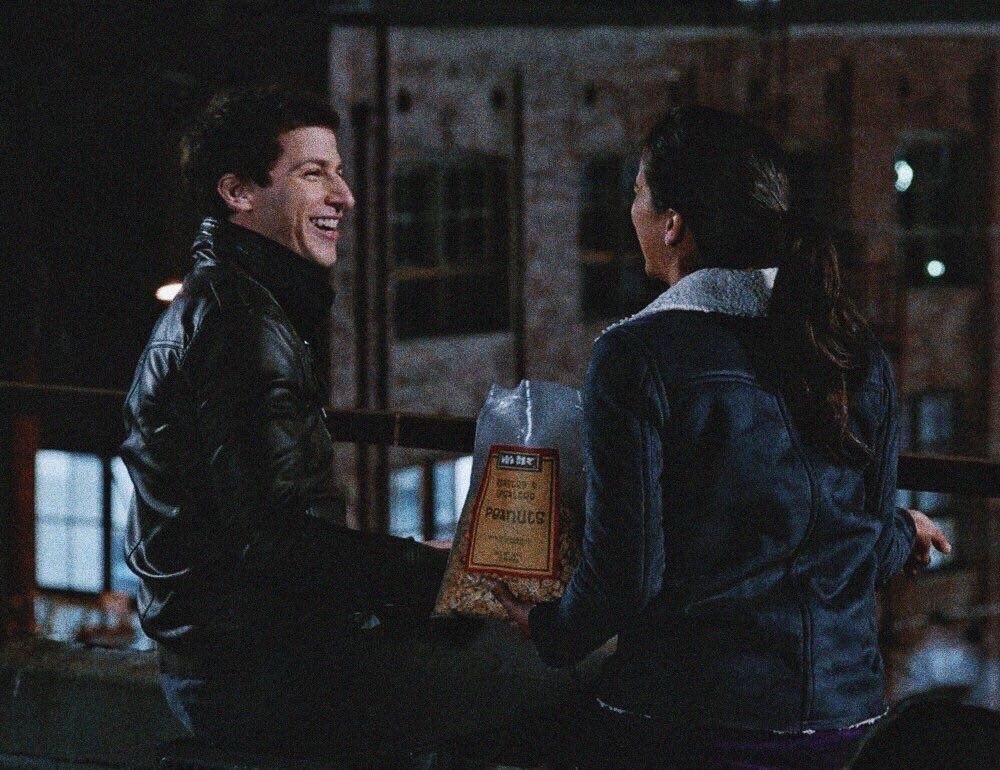
    People who read my blogs on the daily, know that I grew up on a daily dose of romcoms. Especially Hollywood romcoms. And if you are one of those people who has consumed their share of these movies, you know the friends-to-lovers trope is a common theme in most of them movies. Think Monica and Chandler from F.R.I.E.N.D.S. Two friends who know each other since years find each other in love years later. Or Jake and Amy from Brooklyn 99. Or Penny and Leonard from The Big Bang Theory. Or movies like 13 going 30 or 500 days of Summer or a million more. There are so many more from where these came. What I mean to say is, we’re sold this trope because this is one of the most beautiful bonds to think about. But what about the weight of actually risking the friendship?


    3. The Quiet Shift

    No one really talks about what happens before that moment. The almost-confessions. The way your words stop just short of meaning something. The way you start noticing things you never paid attention to before—who they text first, who they sit next to, whether their voice changes when they say your name. It’s subtle at first. And then it’s not. And suddenly something that felt easy starts feeling careful. Like you’re constantly editing yourself in real time. Because now there’s something at stake.

    So you lie. Not loudly. Not dramatically. Just in small, convincing ways. You say it’s nothing. You say it’ll pass. You say you’d rather have them like this than not have them at all. And maybe that’s true. Or maybe that’s just the version of truth you can live with. Because the alternative is terrifying. Because the moment you say it out loud, you can’t take it back. And the worst part is—not that they might not feel the same—but that they might look at you differently after. Like something has shifted. Like something has been broken.

    And maybe that’s why that line stays. Because it’s not just about lying. It’s about where you learnt it from. It’s about how the one person you want to be honest with is also the one you hide from the most. And somehow, that feels like the biggest betrayal of all.


    4. Choosing the Risk Anyway

    Now despite the mess, despite knowing the price, we still fall in love with the one person we should not. Despite all of the things I just said about the weight of risking the friendship, I will always say friends-to-lovers is one of the best ways to fall in love. Imagine finding your best friend and also the love of your life in the same person. Isn’t it special? If you haven’t had the chance to feel it, let me tell you that it is one of the most amazing feelings.

    I have been reading quite a lot about this “trope” nowadays and I completely agree with what my fellow bloggers have to say. The “slow burn” is easier said than done. The “confession” is easier said than done. There’s a lot at stake even without the other person not receprocating the same feelings. But while the 30-minute sitcom episodes or 3-hour movies hardly show the struggles, (simply because it’s not possible to be true to the art as well as the reality of the trope) I will always crave for what Monica and Chandler had or Jake and Amy had. Or what my parents and my friend’s parents have.

    I want someone who knows me without me having to translate my soul because we speak the same language (even if the dialect is slightly different). I want someone who did not feel attracted to me because of what I had to offer, no matter how little. I want someone who saw me and found me interesting in the unromantic way. I want someone for whom I did not experience falling in love, at first sight. But rather one for whom my feelings developed, slowly and steadily. A love where I started noticing the little knowing smile he has when he knows he struck a chord. Or the baby face he makes when something doesn’t go his way. Or the way his eyes always find mine amidst the chaos. I want to feel the safety of friendship with my person and be undeniably in love.

    While I write this, I am reminded of a line from one of the most unlikely book I should be thinking about right now. It’s “My Dark Vanessa” by Kate Elizabeth Russell. The line goes:

    “People will destroy everything for a little bit of something beautiful”

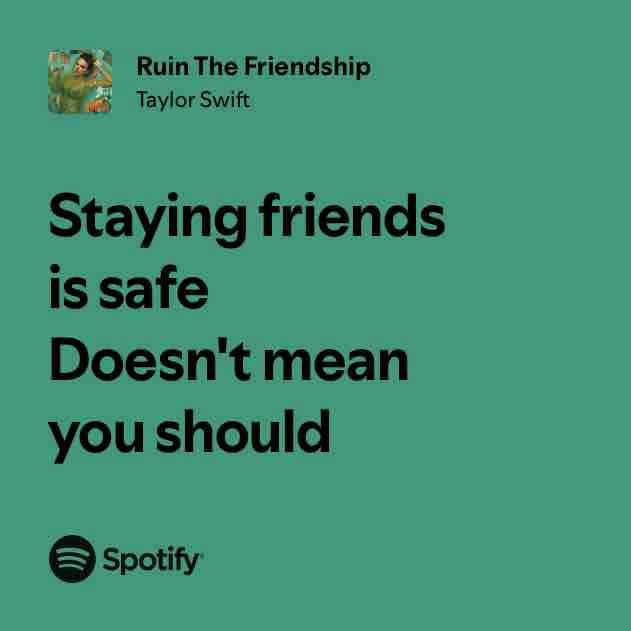
    And while I don’t want to experience a little bit of this beautiful story, I believe it somehow perfectly portrays what goes on in someone’s mind right before they confess. And you know what? I believe if there’s a chance for you to find love in your best friend, I say go for it. Risk it all. You know what Taylor Swift said about this right?

    “My advice is always ruin the friendship
    Better that than regret it for all time”

    Wow I have blabbered on about friends-to-lovers for an ungodly amount. Anyway, ignoring the voices in my head, I want to say this one last thing: sometimes the “risking it all” is better than the “what could have been”.

    To all my readers gushing over all the characters I named here, I love you and I hope you get your love story.

    Cheers, Penny! 🧿✨


  • Melancholic Touchstone

    You’ll always be my melancholic touchstone, it seems—

    the one I fold into every 11:11 wish.

    The place my heart returns to

    to remember

    what it felt like to be almost chosen.

    To be known

    and still not kept.

    And me—your mirrorball.
    All shimmer and borrowed light,
    spinning just so
    your eyes can glow a little brighter.

    I make constellations out of you.
    Out of us.
    Out of things that never quite exist.

    And when the night ends?
    I don’t.

    I stay.

    Still.
    Abandoned.
    A glimmer with no gaze to hold it.

    Even in your melancholy,
    you breathe life into me—
    carelessly,
    like it costs you nothing.

    And then you stop.

    You stop
    once you’ve taken all the light you needed.

    Because I’m not the one you love.

    I’m the one who stays—
    despite the quiet,
    despite the knowing,
    despite the melancholy
    you leave behind in me.